2026-10-12 · Johann Keller
Microwave Not Working? Common Causes and Fixes
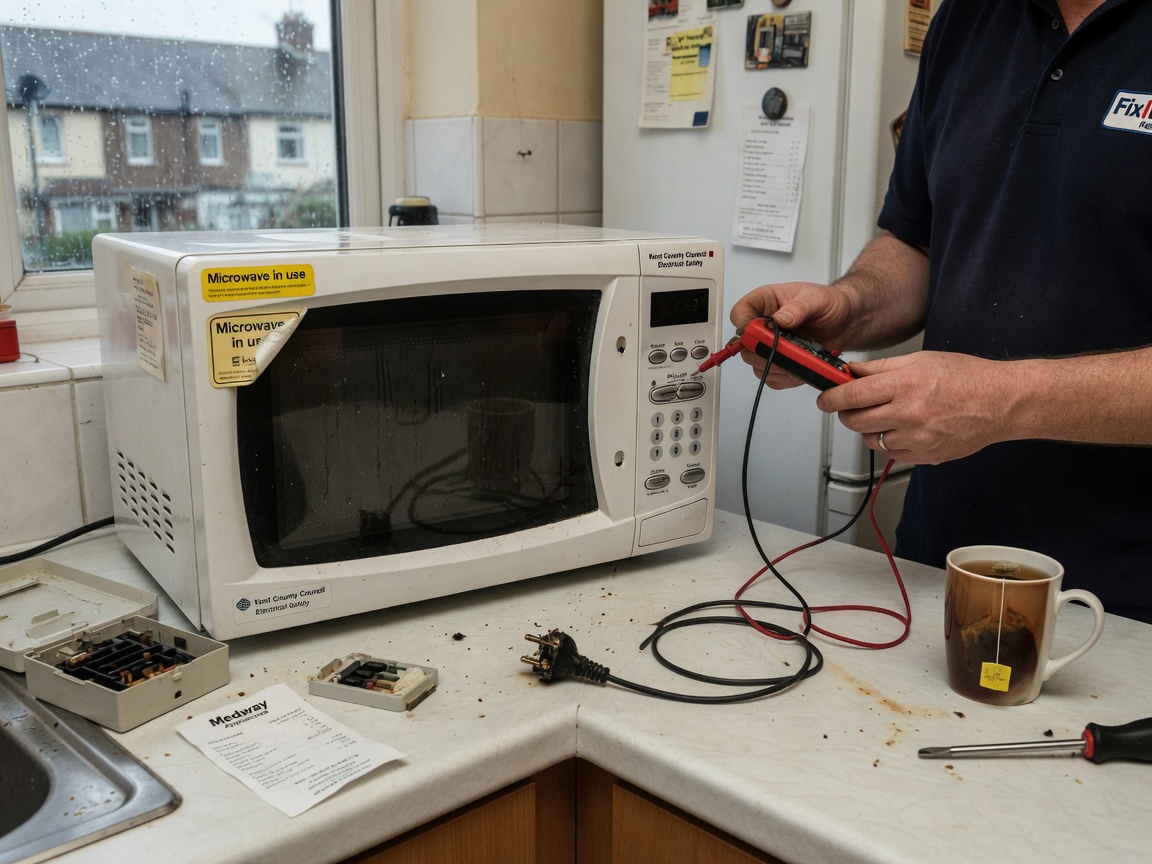
Microwaves in Kent typically stop from a tripped breaker, faulty door switch, or failing magnetron rather than total breakdown. These three causes account for most no-heat or no-power calls across University District apartments and older Downtown Kent homes built before 1980. Start by confirming the outlet works with another device and checking the breaker panel, which resolves roughly half of first-time failures without tools.
Checking the Power Supply
In Portage County homes near the Cuyahoga River, winter voltage dips from heavy snow loads on lines can trip internal microwave fuses even when the rest of the house stays powered. Unplug the unit for two minutes to reset, then test the dedicated 15- or 20-amp circuit. Older Franklin Township ranches often share circuits with refrigerators, so moving the microwave to its own outlet prevents repeated trips. If the display stays dark after these steps, the problem sits inside the line filter or control board, both common on units 8–12 years old. Residents in Brady Lake cottages see extra failures after summer storms because lightning surges damage the same components. Always verify the cord itself shows no burn marks before assuming an internal fault.
Inspecting the Door and Switches
Door switches fail more often in high-use households near Kent State University where students reheat meals multiple times daily. The three micro-switches behind the door latch must close in sequence; a single misaligned switch stops the magnetron from energizing even though the light turns on. Open the door slowly and listen for distinct clicks; absence of one click points to the primary or secondary switch. Replacement switches cost $15–$40 and take 20 minutes with a screwdriver on most brands. In humid summers, moisture inside the latch assembly corrodes contacts faster, especially in Downtown Kent buildings without central air. Never bypass switches as a temporary fix because the microwave can energize with the door open, creating a safety hazard.
Magnetron and Capacitor Failures
When the microwave runs but produces no heat, the magnetron tube or high-voltage capacitor has usually failed after 7–10 years of service. These parts sit behind the control panel and require discharging the capacitor before any inspection. In Tallmadge and Streetsboro split-levels with finished basements, extra humidity accelerates corrosion on the diode and capacitor terminals. A burned magnetron often smells like electrical smoke and leaves scorch marks on the waveguide cover. Replacement magnetrons run $80–$150 plus labor, while capacitor and diode sets stay under $60. Attempting these repairs without proper discharge tools risks severe shock, which is why most Kent homeowners stop at the power and door checks.
Knowing When to Call for Help
If basic checks do not restore function, contact a technician who services Portage County daily rather than ordering parts online. Units still under 5 years old may qualify for manufacturer warranty work, while older models in Akron-adjacent neighborhoods often need the full high-voltage section replaced. 24-Hour Microwave Repair covers evenings and weekends when students or shift workers discover problems. For guidance on selecting a shop that actually stocks parts for common Kent brands, read How to Choose a Reliable Appliance Repair Service. Technicians based at 429 Portage Blvd keep hours from 8am–6pm weekdays and 9am–2pm Saturdays to match local schedules.